Conversion-Oriented Landing Page for a Digital Academy
ACADEMY
UX Cristopher
ROLE
UX/UI Designer
SKILLS
UX/UI Design
YEAR
2025-2026
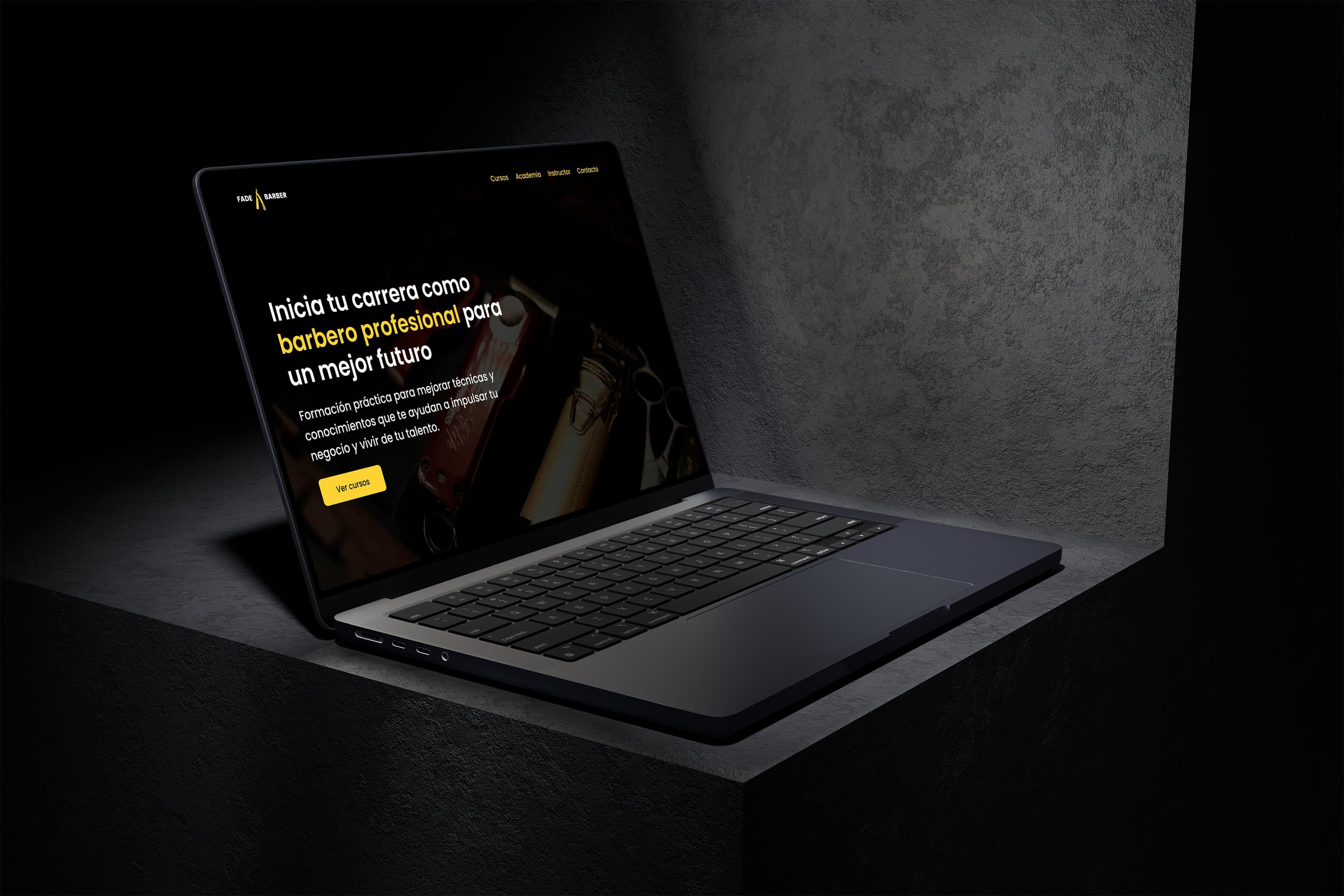
Project Description
Project developed during the UI Design professional training – UX Cristopher, focusing on interface design best practices, visual consistency, structure, and usability.
As a final project, the challenge was to identify a real-world problem and design a product-minded digital solution, applying principles of hierarchy, clarity, and a conversion-oriented user experience.
The Problem
The digital presence showed a visual structure poorly optimized for conversion, featuring weak typographic hierarchies, inconsistent spacing and alignment, and an unclear value proposition.
The lack of visual order reduced the perception of professionalism, trust, and the academy's premium positioning.
Design Process
The process focused on researching and analyzing effective patterns in digital academies and detecting common friction points to design a clear, accessible experience oriented toward making course exploration effortless.
Structure, Interfaces, and Visual Clarity
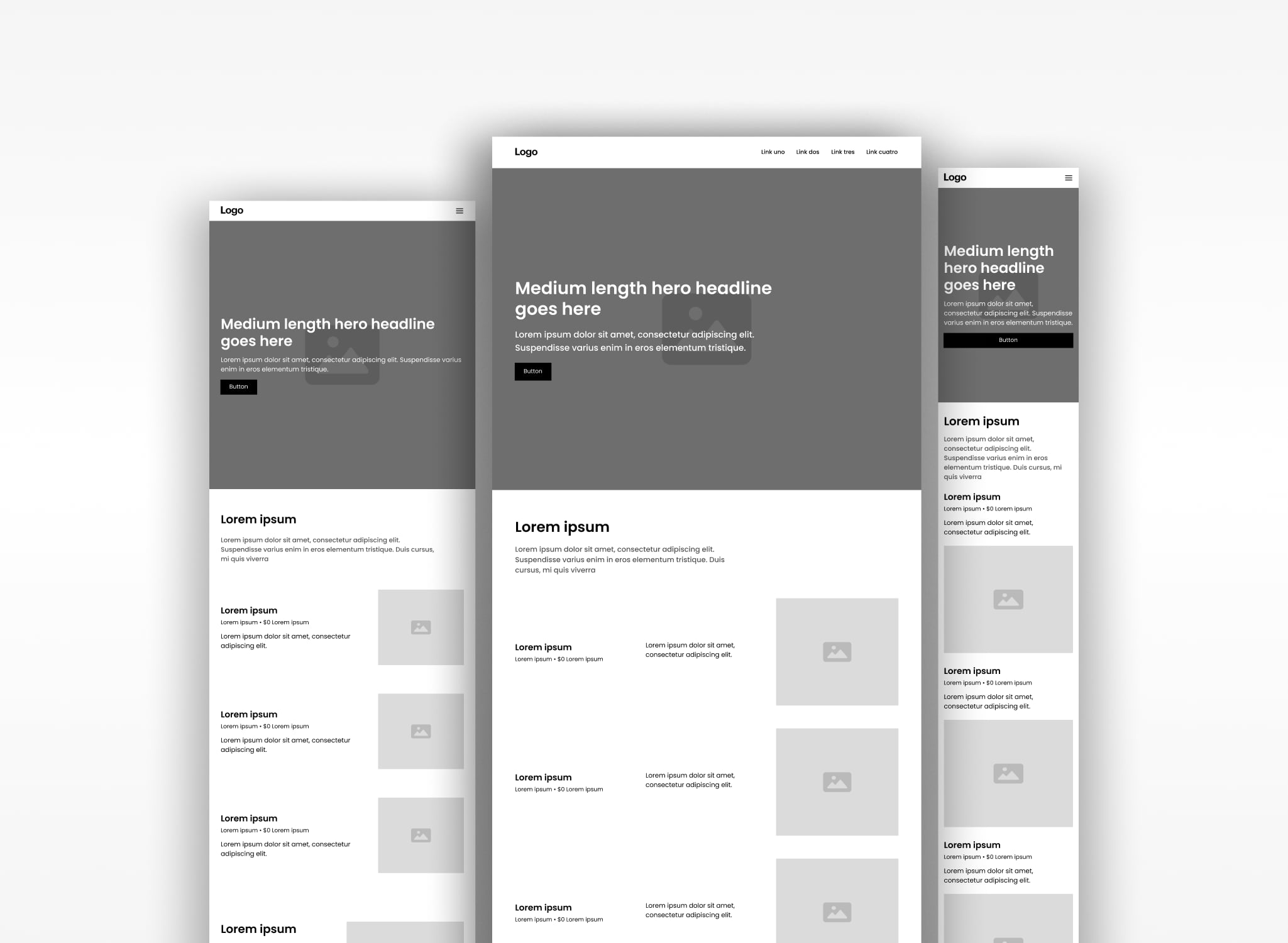
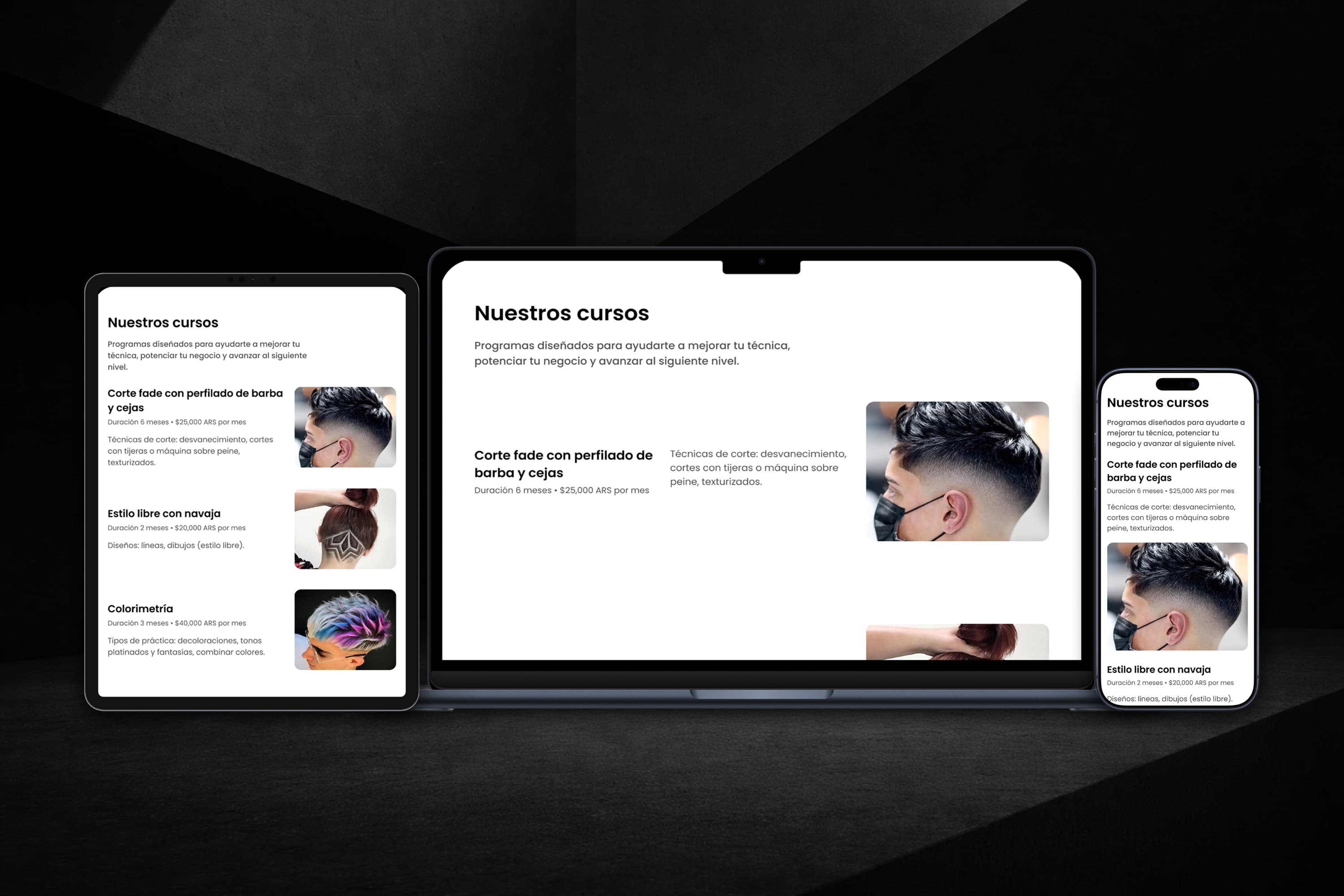
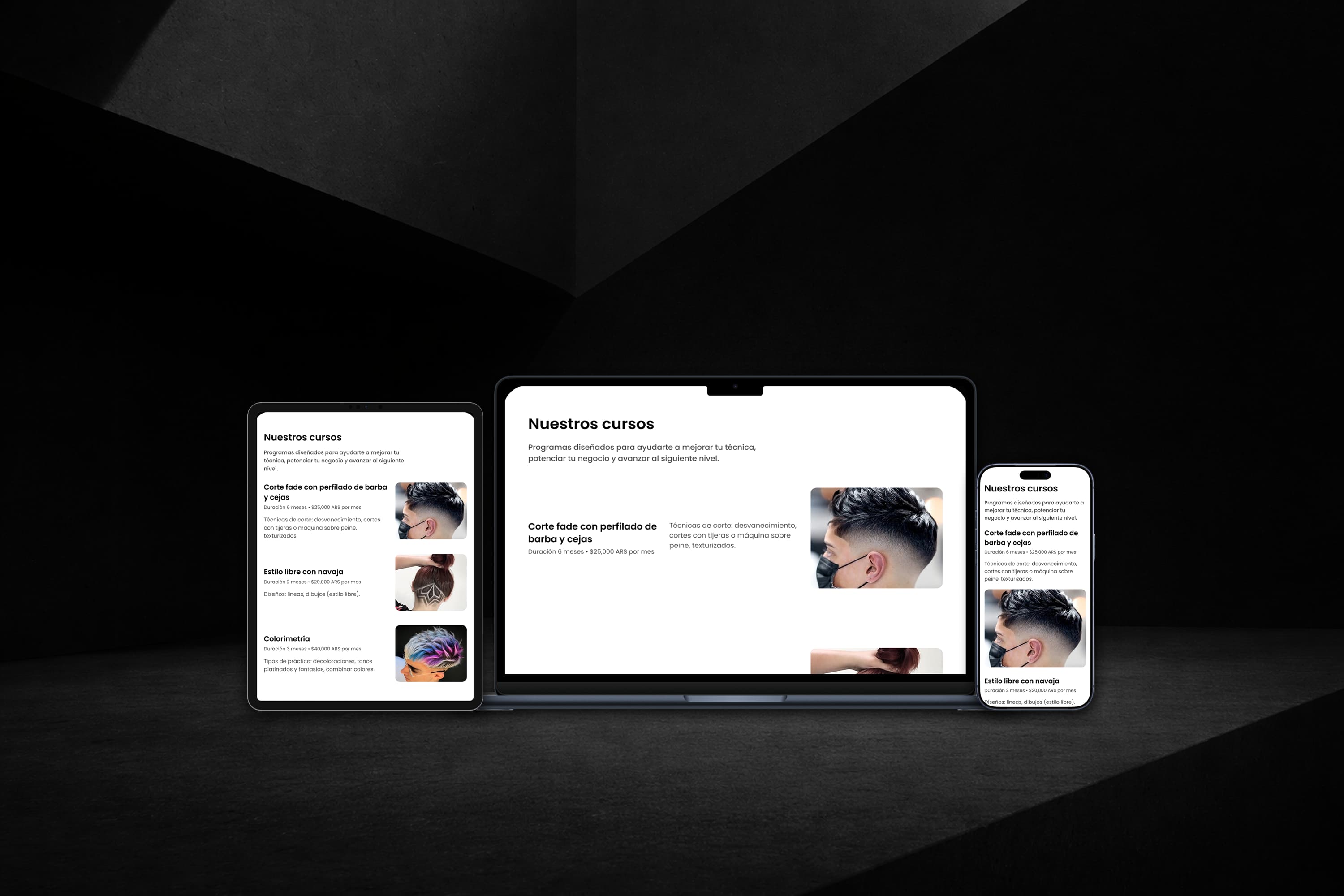
Mid-fidelity wireframes and prototypes were developed to validate architecture, user flow, and responsive consistency across desktop, tablet, and mobile.
The final design prioritizes strategic hierarchy, scannability, and clear structure over decorative elements, facilitating immediate understanding of the value proposition and reducing friction during course exploration.
The Solution
A clear and direct landing page was designed, focused on communicating the academy's value from the first point of contact and facilitating frictionless course exploration.
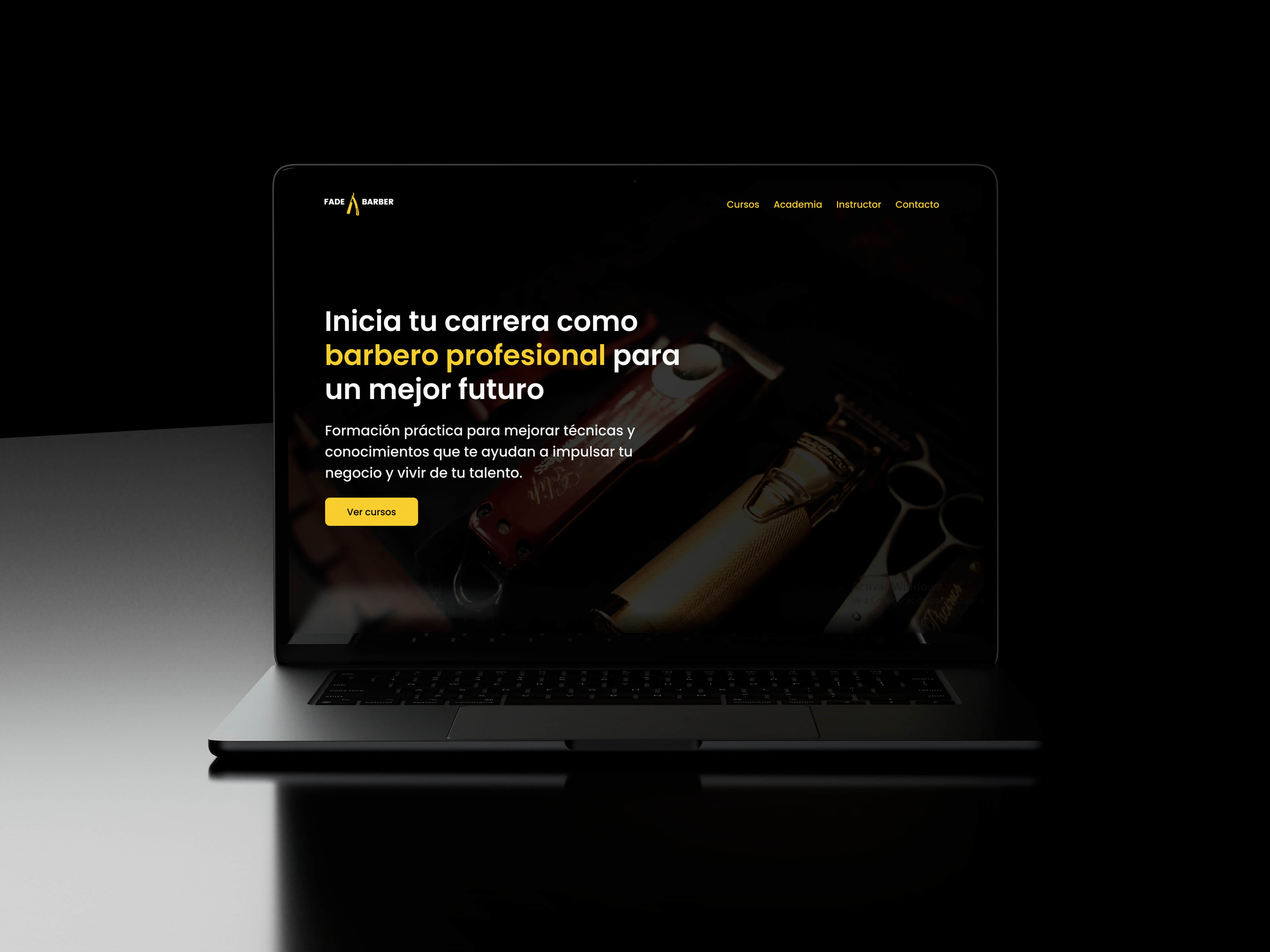
Hierarchy and Value Proposition
The hero section was designed to quickly communicate what the academy offers, who it is for, and what the next step is, using clear typographic hierarchy and visible calls to action (CTAs).
Content Structure
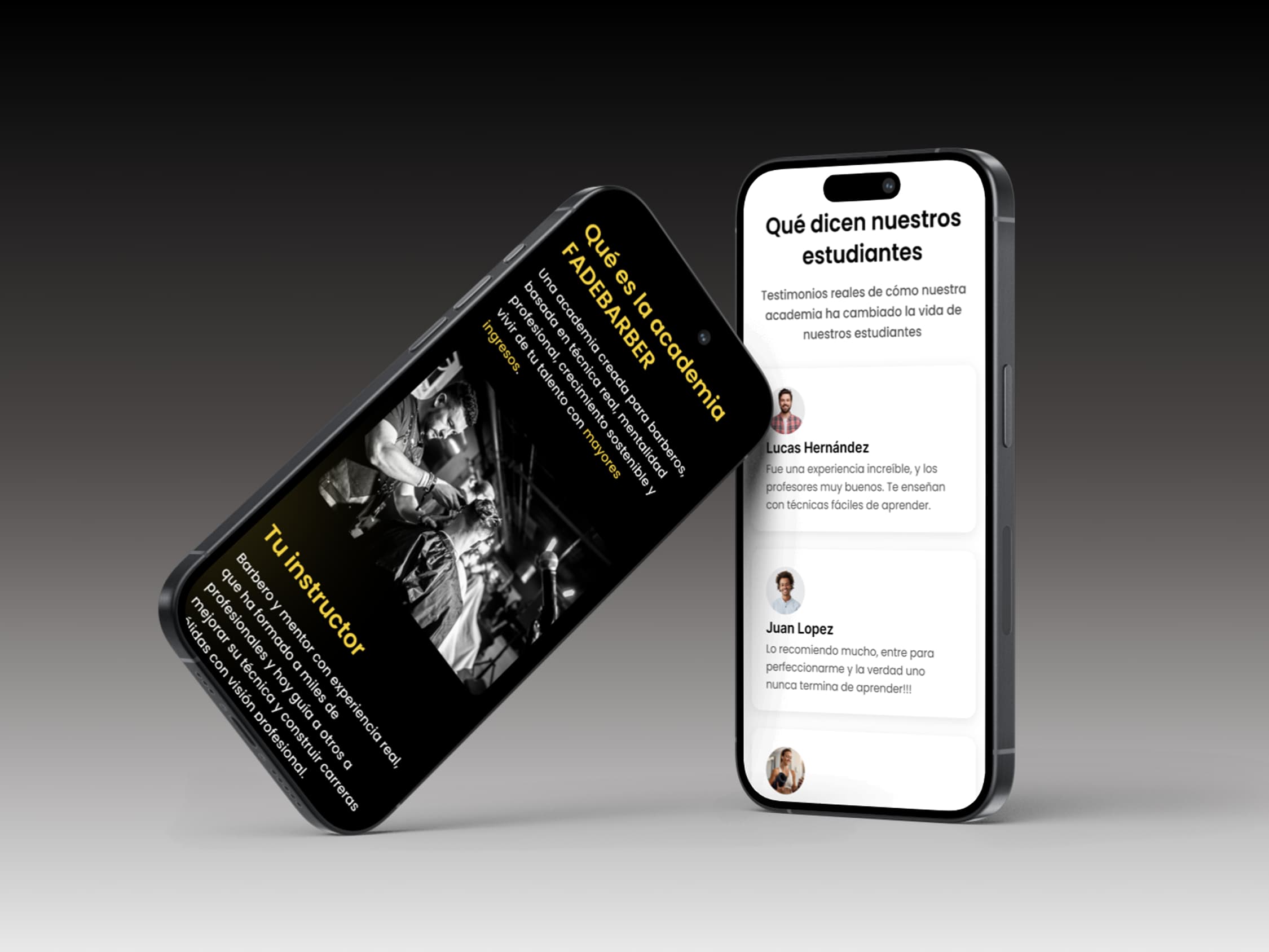
Sections were structured in a strategic order: value proposition, benefits, academy details, instructor, and testimonials, naturally guiding the user through the journey.
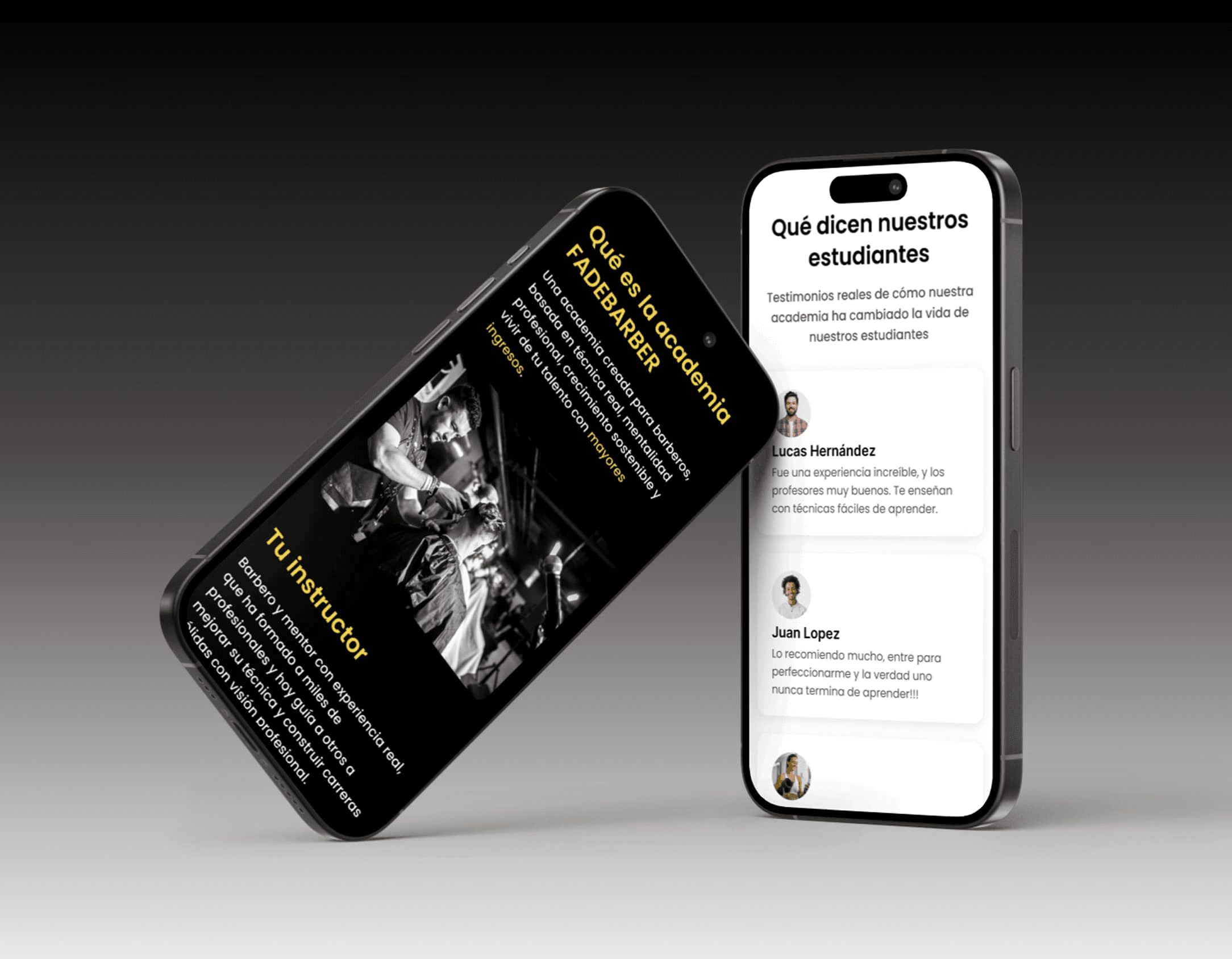
Responsive Experience
The design followed a responsive and mobile-first approach, adapting structure and hierarchy to ensure clarity and usability on both desktop and mobile devices.
This approach reduces bounce rates by eliminating technical barriers and friction, encourages engagement (clicks), and contributes to improved SEO and conversions by ensuring optimal content adaptation on every screen.
From Design to Product & Impact
Once validated in Figma, the design was implemented in Framer to turn the visual proposal into a functional, responsive, and production-ready experience.
The implementation maintained the hierarchy, structure, and spacing system defined during the design phase, adapting components to a real environment and incorporating subtle micro-interactions to enhance the experience.
Work was done on responsive behavior, interactive states (hovers and validations), and visual consistency, ensuring clarity, fluidity, and scalability.
This transition from design to product materialized an experience consistent with strategic goals, strengthening professional perception and optimizing the conversion path.
Stack & Technical Approach
The solution was developed by combining structured design in Figma with implementation in Framer, ensuring visual consistency, a scalable system, and high-fidelity production.
A design system based on components, variables, and Auto Layout was applied to maintain coherence and facilitate future iterations.
The process included structure validation through prototyping and the use of AI tools for research and UX writing optimization.
